

You will not be allowed to compare more than 4 products at a time
View compare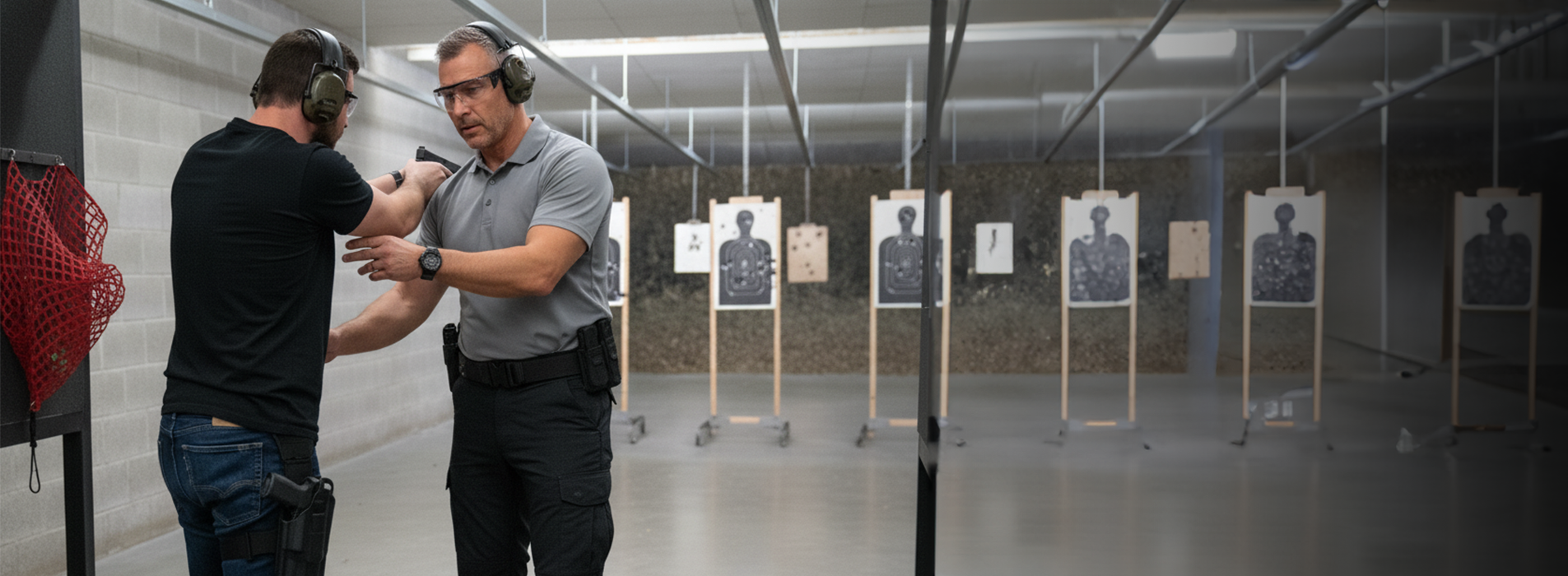

CRFSC – Canadian Restricted Firearms Safety Course
What Are Restricted Firearms in Canada?
Restricted firearms are a legal classification under the Criminal Code and the Firearms Act. In general, restricted firearms include:
• Handguns (that are not prohibited).
• Rifles and shotguns that:
• Have a barrel length less than 470 mm (18.5 inches) and are not prohibited.
• Can discharge centre-fire ammunition in semi-automatic mode and are less than 660 mm (26 inches) overall length.
• Any firearm classified as restricted by an Order in Council.
Restricted firearms must be individually registered, and owners require an Authorization to Transport (ATT) to move them to and from approved locations such as shooting ranges.
Key Legal Requirements for Restricted Firearms Owners
• License: Must hold a valid PAL with Restricted privileges.
• Course Completion: Must pass both the CFSC (Non-Restricted) and CRFSC (Restricted) safety courses.
• Registration: Every restricted firearm must be registered to the owner.
• Authorization to Transport (ATT): Required to legally transport a restricted firearm from its registered address to an approved destination (e.g., range, gunsmith, or border for export).
• Use: Restricted firearms may only be discharged at approved shooting ranges. Hunting with restricted firearms is prohibited.
About the Canadian Restricted Firearms Safety Course (CRFSC)
The CRFSC is a nationally regulated program developed by the RCMP and the Canadian Firearms Program (CFP). It is a mandatory course for individuals who wish to acquire and legally own restricted firearms in Canada.
Course Focus
The CRFSC builds on the non-restricted course (CFSC) by addressing:
• Safe handling of restricted firearms (primarily handguns).
• Legal transport and storage requirements unique to restricted firearms.
• Ammunition and ballistics specific to handguns and restricted long guns.
• Range safety, protocols, and best practices.
• Legal responsibilities under the Firearms Act and Criminal Code.
Format & Structure
• Duration: 4–6 hours (often taken back-to-back with the CFSC for convenience).
• Instruction: Classroom theory and hands-on handling practice with disabled restricted firearms.
• Examinations:
• Written exam (multiple choice, true/false).
• Practical exam (safe handling test).
• Both exams must be passed to receive your course results.
• Instructors: Courses are delivered by RCMP-certified instructors.
Eligibility
• Minimum age: 18 years to apply for a Restricted PAL.
• Youth 12–17 years may attend for educational purposes (Minor’s License does not apply to restricted firearms).
• Must provide government-issued photo ID at course check-in.
What Students Receive
Upon successful completion, students receive:
• The official CRFSC course results paperwork (needed for the PAL application).
• Knowledge and practical training in restricted firearm safety, handling, and law.
• The foundation required to responsibly and legally pursue restricted firearm ownership in Canada.
Next Steps After Passing:
1. Submit your PAL application (RCMP Form 5592).
2. Attach your CFSC & CRFSC results.
3. Complete background checks and references.
4. Once approved, your Restricted PAL card will arrive by mail.
5. Register any restricted firearms you acquire, and obtain an Authorization to Transport for lawful movement.